
The Supernova Hypothesis
Breakthrough in Captivity for Founders & Innovators

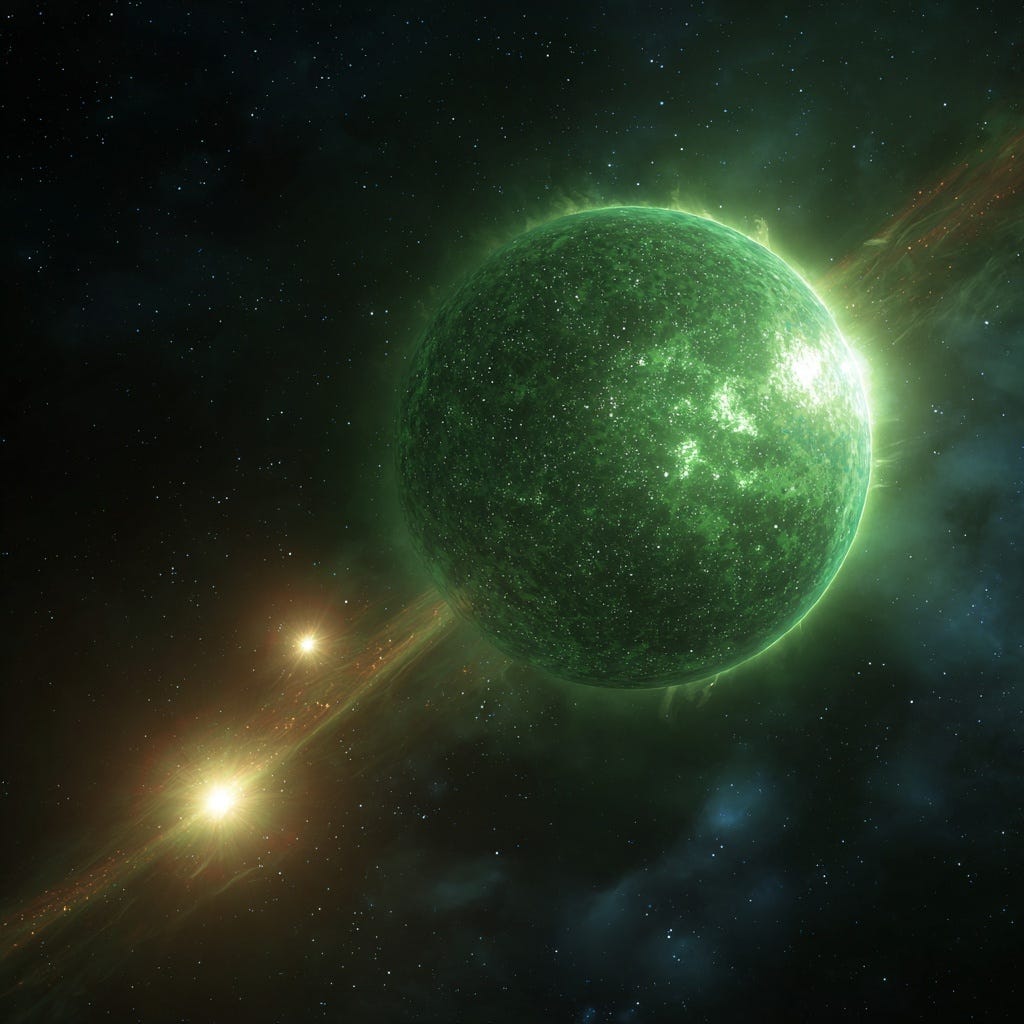
Introduction — The Star That Dies
In astrophysics, the most violent and spectacular events are not acts of creation, but collapse. A star spends millions of years burning steadily, balancing gravity with fusion. Yet when its fuel runs out, gravity wins. The star implodes. Sometimes it detonates in a supernova so bright it outshines entire galaxies. Sometimes it channels its collapse into a gamma-ray burst — the most powerful release of energy known in the universe.
And yet — what looks like an ending is not annihilation. The explosion enriches the cosmos. Nebulae form from the ashes, birthing new stars and worlds. Remnants compress into neutron stars or black holes, objects of staggering gravity and mystery. Out of death, creation. Out of collapse, renewal.
What if this was not just a story of physics, but of founders and innovators — those eccentric builders and technologists whose lives burn brightly, and sometimes collapse catastrophically?
For many, collapse is not gradual. It comes suddenly:
A co-founder walks away.
The term sheet vanishes.
The code breaks.
The landlord locks the door.
The body breaks down under months of stress.
The mind, stretched under adversity, tears and ruptures.
When this happens, founders often describe it as the end of their world. Identity, security, belonging — all gone in a burst. It feels like annihilation.
But here is the interesting, cautiously optimistic hypothesis:
Breakthrough often hides inside captivity.
Collapse is the precursor to transformation.
Like the dying star, when the individual’s old identity is stripped away, what remains are the raw elements for something new. The pain of collapse is also labor and energy of rebirth.
The Gamma-Ray Burst of the Self
Why gamma-ray bursts? Because they embody what founders often feel in breakdown: a concentrated, overwhelming outpouring of energy.
When the eccentric founder is dismissed yet again, when the depressed technologist burns out, when the misunderstood visionary is told “you’re too early” — the collapse triggers something fierce. It is not gentle. It is explosive.
Sometimes this comes as rage, sometimes despair, sometimes a blinding insight written in a notebook at 3 AM. It can scorch. It can frighten. But if focused, it can also illuminate a new path with clarity sharper than any before.
Gamma-ray bursts are directional. They do not light the whole cosmos; they carve a narrow path of piercing brightness. Likewise, a founder’s breakthrough may not be universal — it is often a precise, narrow, radical clarity. A pivot. A redefinition. A refusal to quit.
The Nebula of Renewal
After the blast, what remains? Ashes, fragments, scattered matter. In space, this residue seeds new galaxies. In human lives, the residue of collapse is equally fertile:
Networks, even if strained.
Hard-won lessons about failure, money, people.
Intellectual property, scraps of code, designs, drafts.
Resilience earned through survival.
This is the nebula of renewal. An individual emerging from collapse has lost the old star — but they carry fragments that can give birth to the next venture, the next identity, the next creation.
One can say:
I am not undone. The collapse, the exile, the rayburst pain — it feels less like annihilation, and more like supernova. I am not who I was. But the ashes around me are rich, and already I see the outlines of what can be built from them.
For founders, technologists, visionaries — the message is simple: when your star dies, do not mistake it for the end. Look for the burst. Gather the ashes. The nebula is already forming.